UX Researcher
My journey
What I'm looking for
What I bring
My toolkit
How I work with data
Broad research from scratch, no artifacts like Personas or CJMs predefined. I dive into research data, then apply thematic analysis – coding data, identifying themes and connections – to understand patterns.
I share findings iteratively with stakeholders through workshops or asynchronous communication. Based on both communication and findings, we identify the artifacts that will best help product owners make decisions.
Then I prepare coded or clustered data as building blocks, and map them into artifacts – alone or together with stakeholders. Iterate.
Ad-hoc research is more narrow – understanding usability issues, finding answers to specific questions, or filling gaps in existing research artifacts.
I cluster research data into preset blocks (artifacts or questions), extract insights to communicate them live to stakeholders, and prepare a workshop or report to turn insights into actionable steps.
Delivery
The main idea of delivering research findings to stakeholders is to transform these findings into something actionable.
A short summary of insights and visualized suggestions or next steps (schemas, prototypes). Receivers are those responsible for immediate implementation.
A workshop allows not only to fill in the backlog, but also to build empathy and teach in-house or client's team to use research artifacts effectively.
1. Overview of the findings
2. Activity with the findings: fill in artifacts, prioritization or ideation session, formulate challenges as HMW questions, etc.
I prepare a report with an overview of insights, performed activities, and next steps.
Selected work
Embedded research and prototyping for a precise-agriculture startup
Lightweight SMS-based MVP instead of a complex frontend – solving the actual user problem faster and cheaper
App audit, interviews, and surveys to uncover a new market for a waste-sorting product
Helping a startup move to the next stage of funding by uncovering new user segments
Designing an adaptable research program for a complex institutional client
Planning a research strategy for a 5-year sustainable mobility fundraising program
70 interviews and behavioral mapping across a complex stakeholder landscape
A complex project with extremely diverse users and a multicultural client team
Helping a precise-agriculture startup release the faster and cheapest MVP
A precise-agriculture startup planned to build a complex web frontend for their soil-sensor data platform. As the in-house UX Researcher working alongside the engineering team, I ran rapid iterative cycles of user interviews with farmers and prototype usability tests to validate which features users actually needed.
Each iteration narrowed the scope further. The research showed that farmers didn't need a dashboard – they needed timely alerts in the first place.
The team replaced the planned frontend with a lightweight SMS-based notification system, shipping the MVP faster and cheaper while solving the actual user problem.
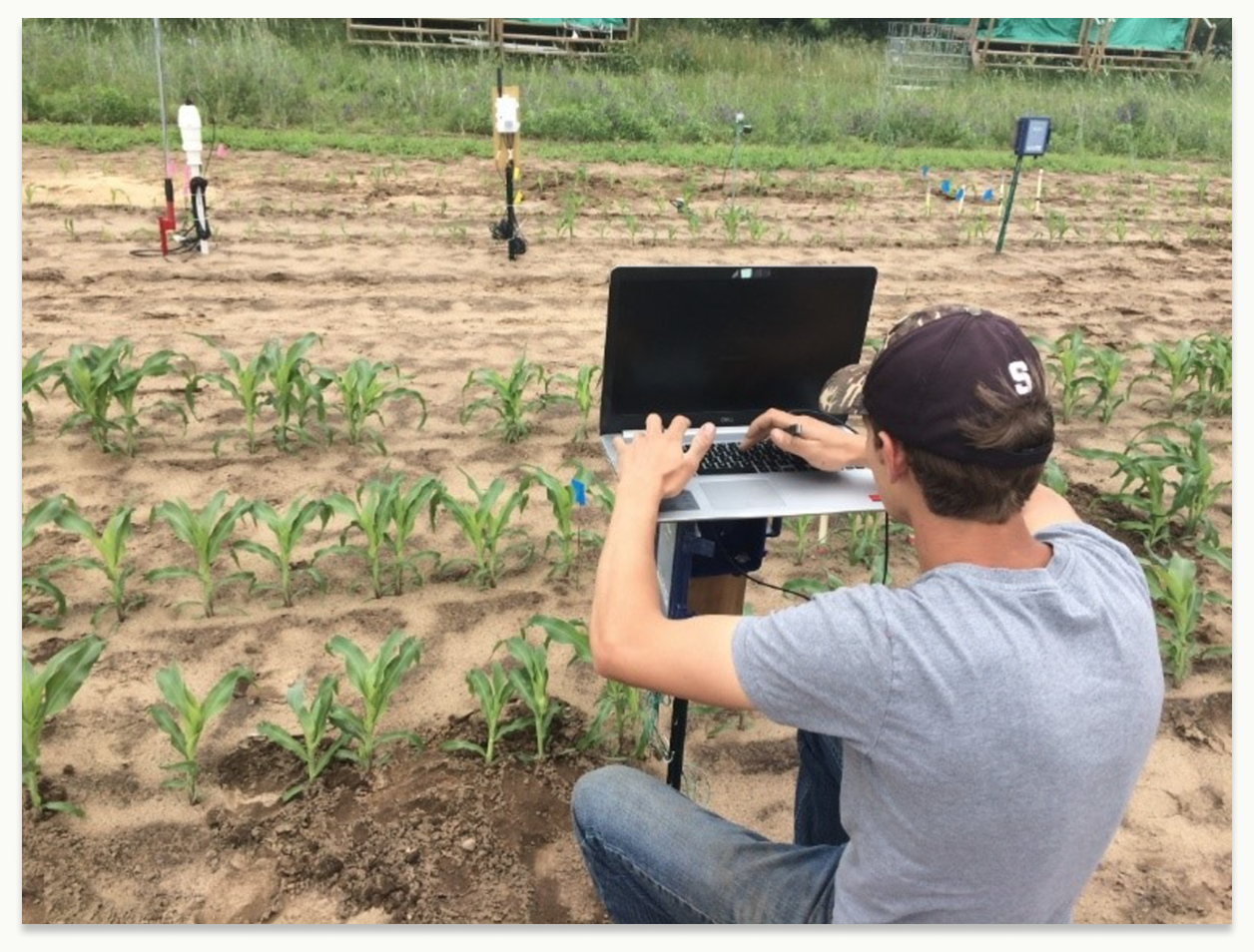
Owned discovery research, interactive mockup creation, and usability testing across multiple iteration cycles, embedded with the product and engineering team.
Light SMS broadcasting system as MVP – instead of the initially planned bulky frontend. Reduced initial feature set from ~12 planned screens.
Helping a startup win a second round of funding by uncovering new user segments
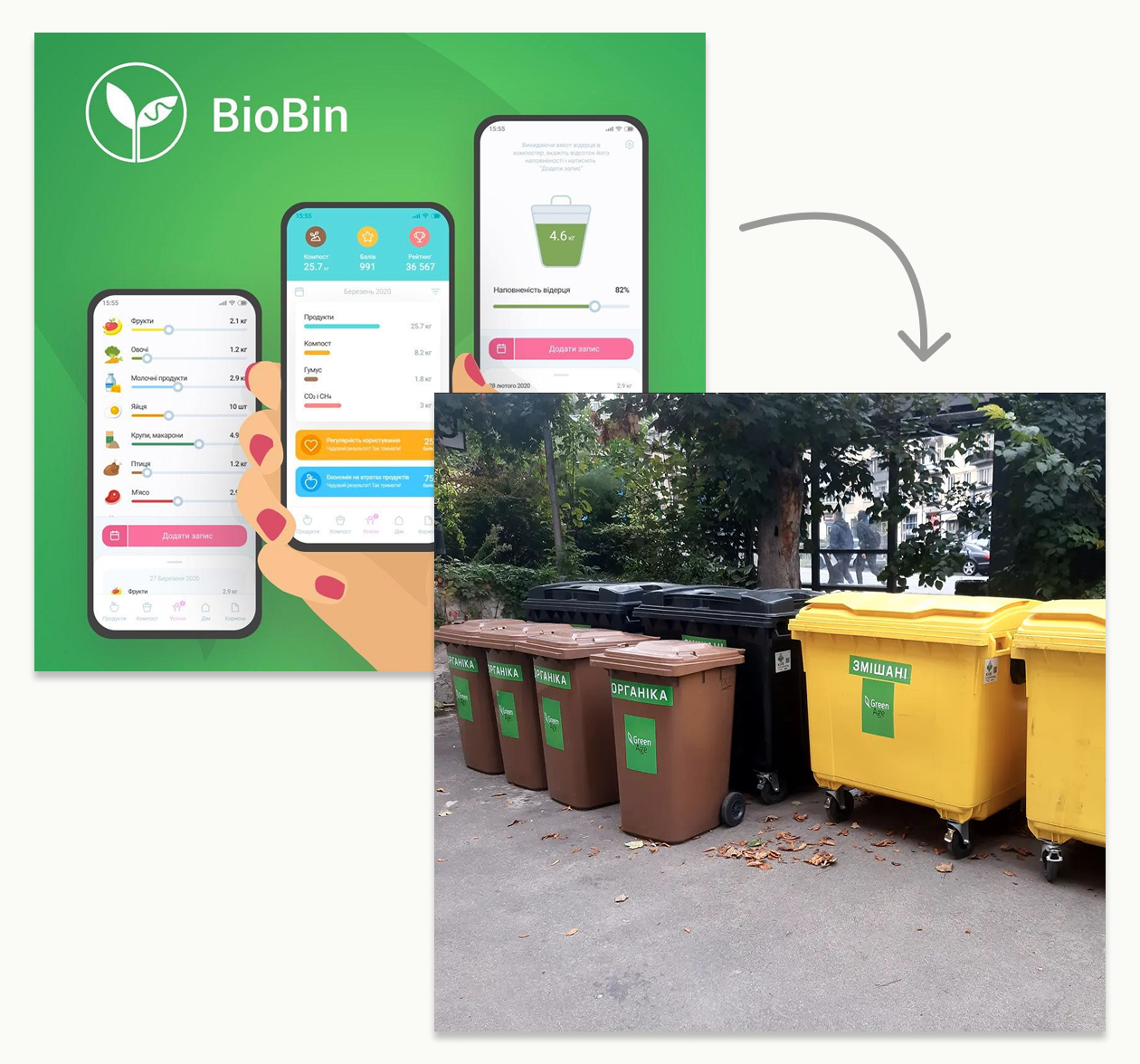
BioBin launched as a consumer-facing waste calculator app and was struggling to find product-market fit. Under tight time and budget constraints, I designed a research program combining app audit, qualitative interviews, and quantitative surveys to test where real demand existed.
The findings revealed a stronger opportunity in the corporate sector. The startup pivoted to a B2B waste-collection and sorting service, secured its next round of funding, built a unique service model, and ultimately became the leading waste-management provider for HoReCa clients.
Reframed the client's initial brief, co-designed the research strategy with the founders, and ran the program end-to-end – from desktop research through workshop-based delivery of findings and ideation.
Designing an adaptable research program for a complex institutional client
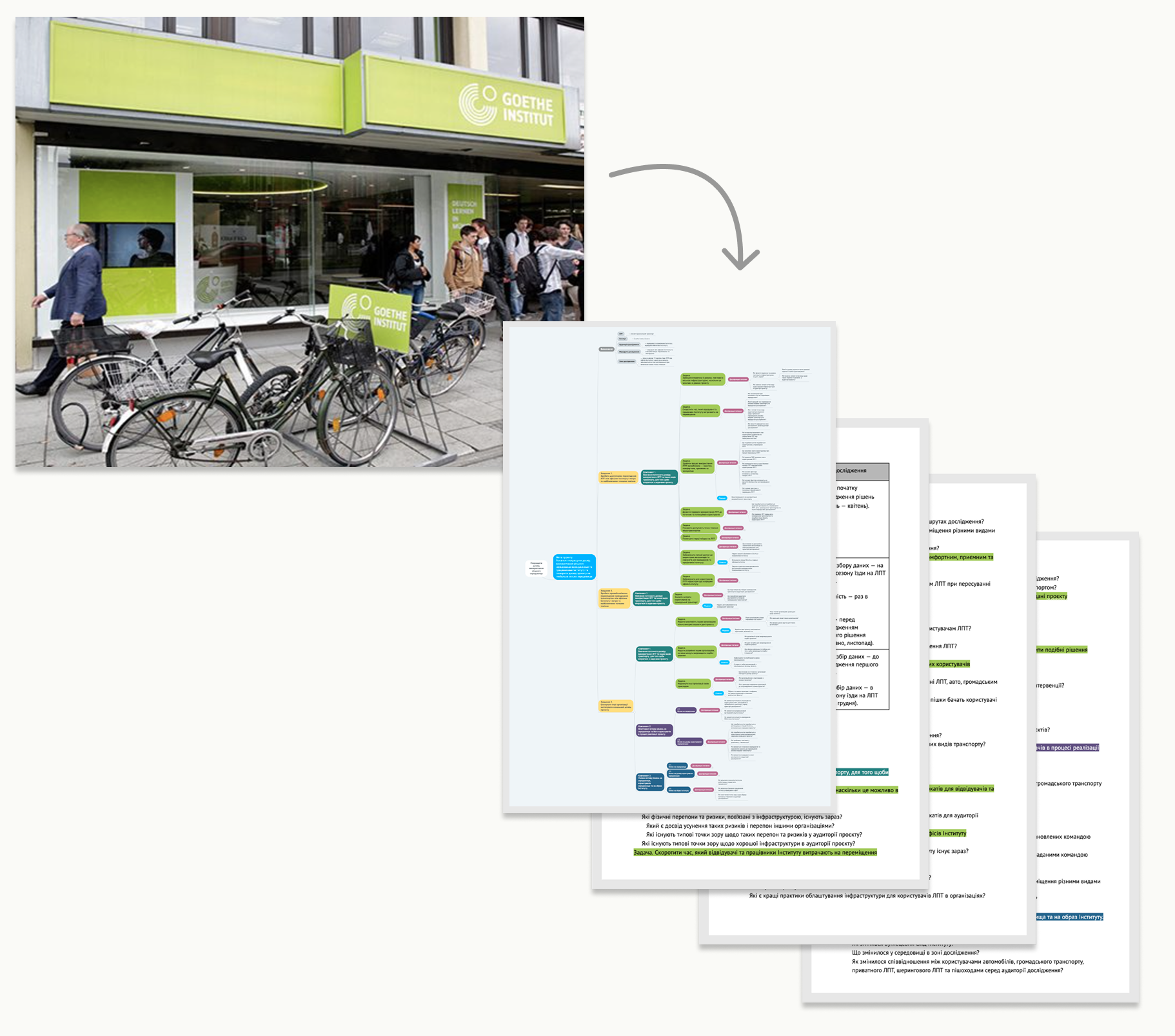
The Goethe-Institut – a German cultural association represented all over the world, funded by the German government and private donors – launched a project converting employees and visitors into using personal mobility vehicles for commuting. They started with two bike-sharing stations and wanted to expand into a 5-year program of reducing pressure on city traffic.
The challenge: project goals, audiences, and success metrics were undefined. I structured the engagement as a chain of facilitated workshops that progressively aligned stakeholders and built consensus on what the research needed to answer.
The result was a flexible three-component research plan that the client used to apply for multiple funding rounds and that became the backbone of their long-term communication strategy.
Designed the research strategy, planned and ran the workshop chain, and built a research program structured to flex across funding cycles.
Each component contains several sets of tasks, research questions, and timelines. Sets can be mixed and rescheduled to suit specific funding applications.
70 interviews and behavioral mapping across a complex stakeholder landscape
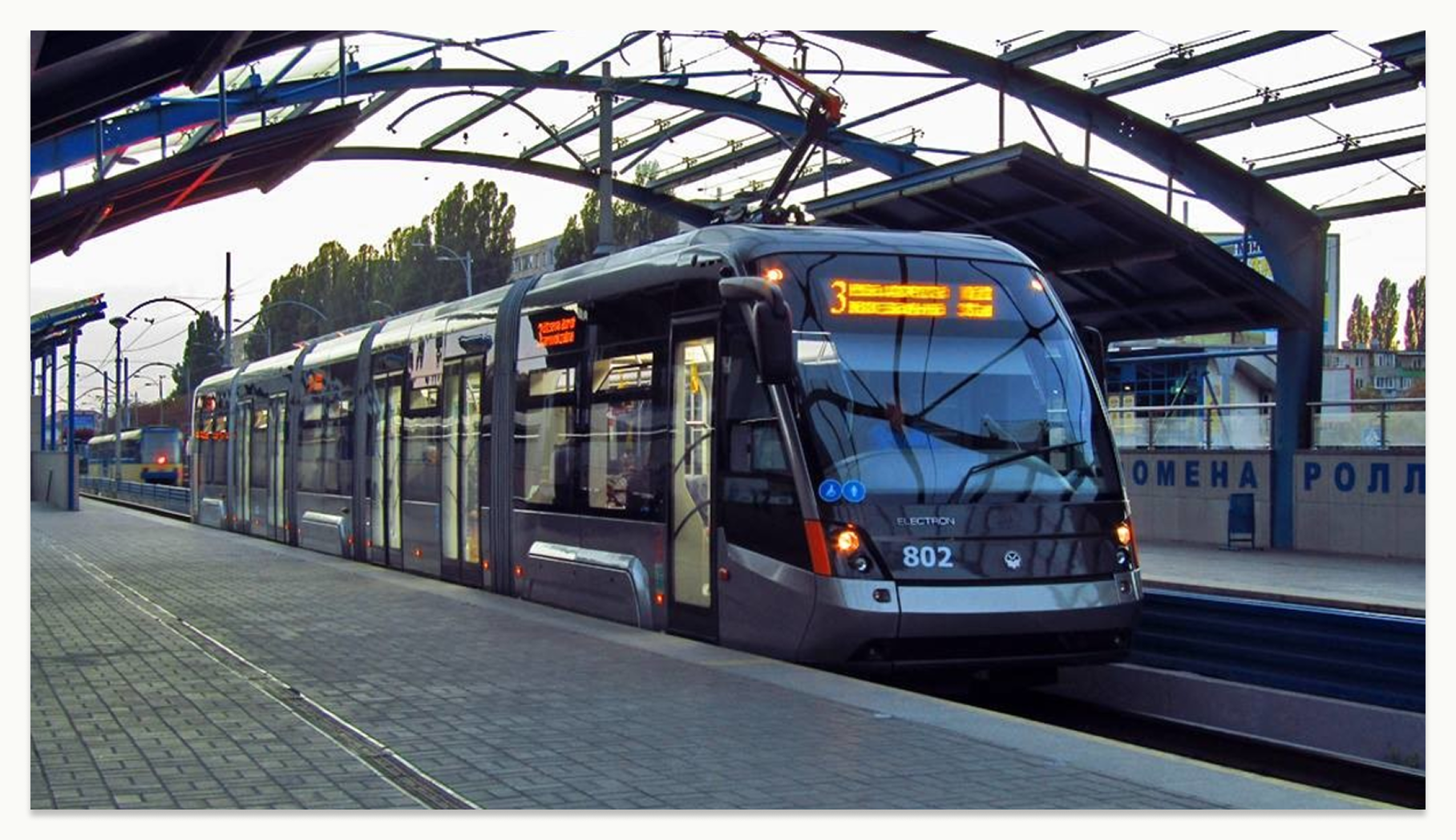
The World Bank initiated a project for a rapid tram line extension in Kyiv. It was a citywide project that would affect almost all users of the area. The purpose of the research was to assist in developing a system for communication and stakeholder engagement throughout the project.
The project required compliance with World Bank standards in ethical research and public presentation, with approval of project stages across all levels of World Bank team management.
Led a team of researchers, cooperated with the World Bank team, and prepared the final public report.
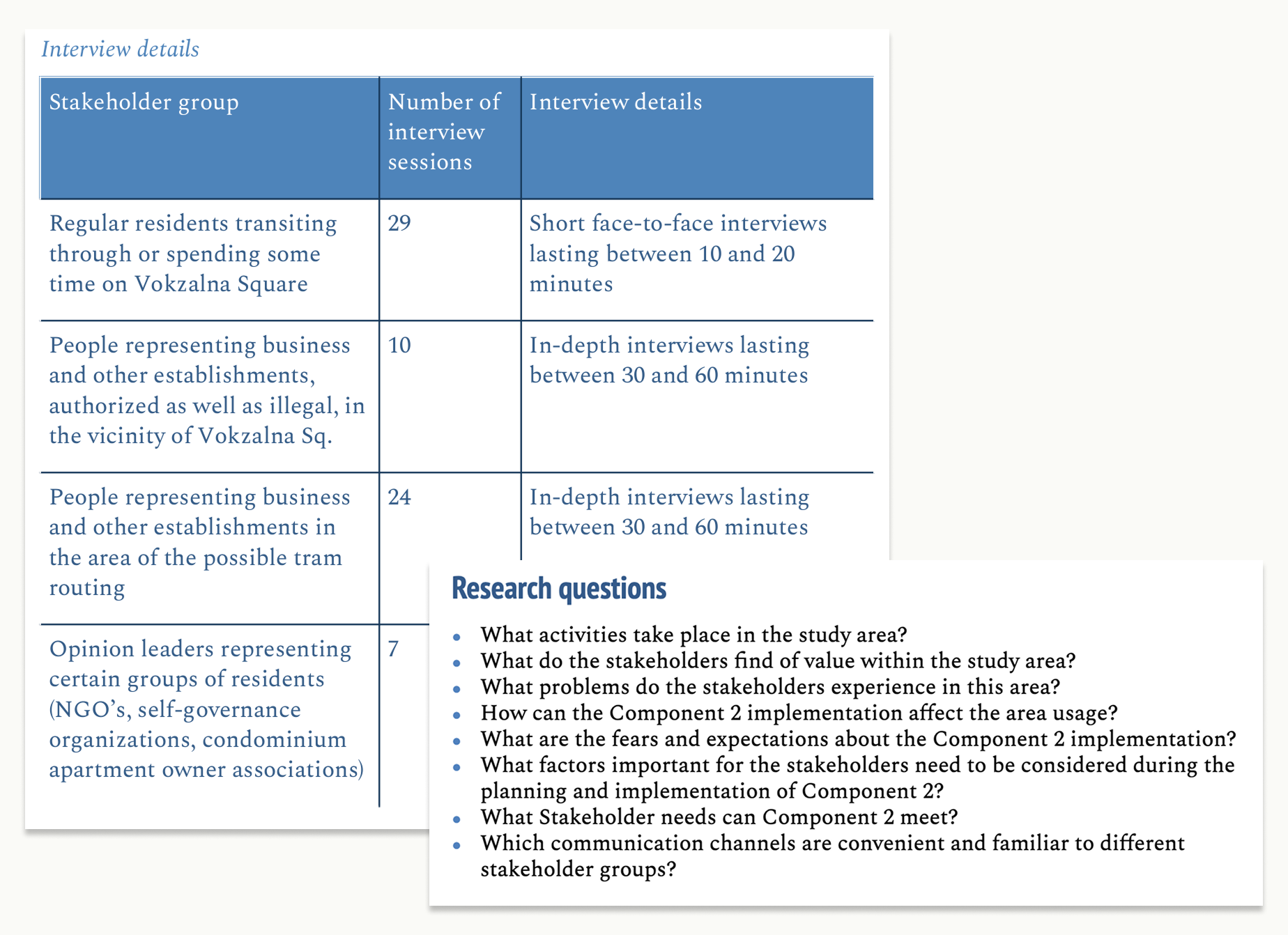
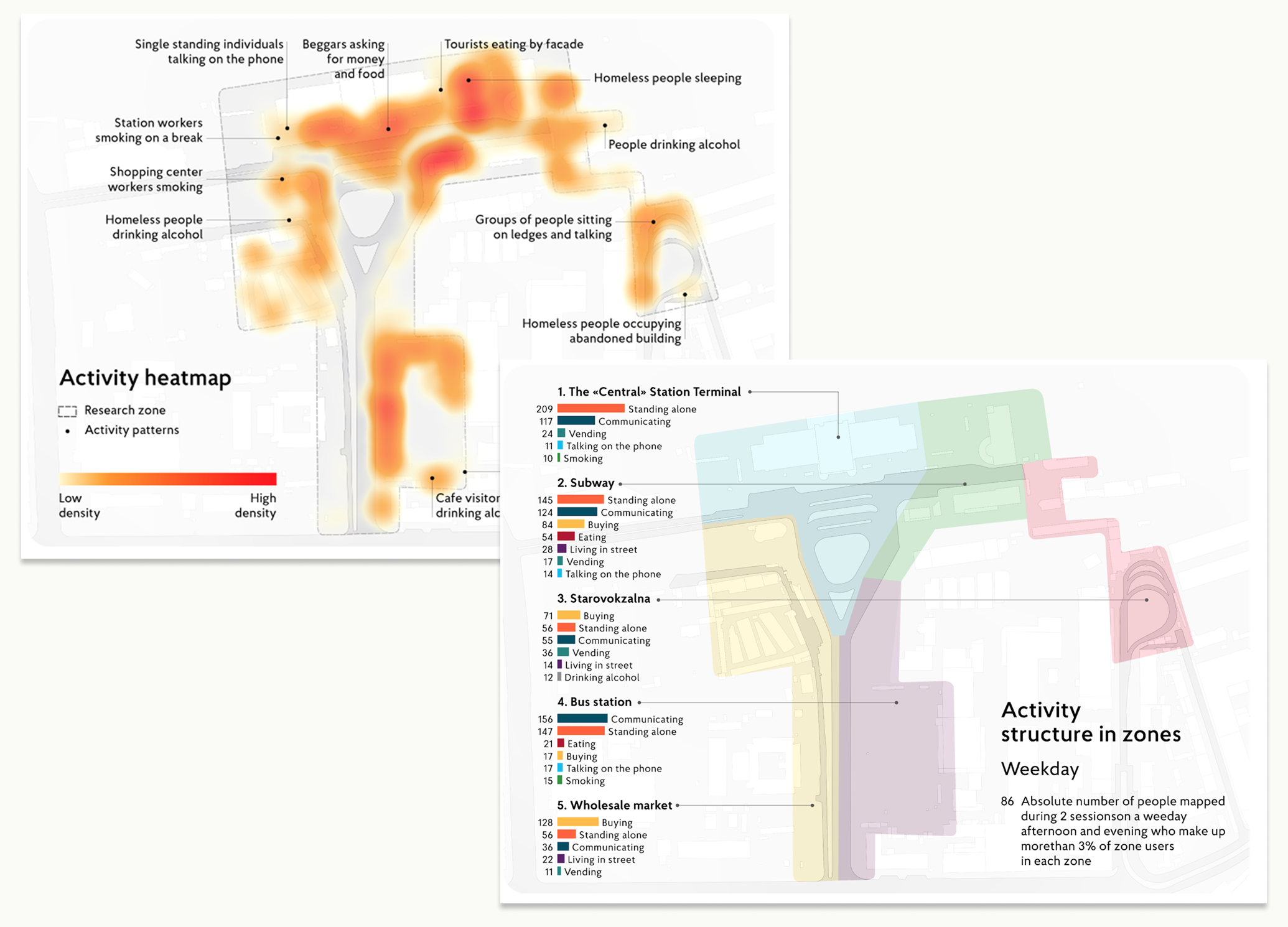
Combination of short face-to-face interviews and in-depth interviews, structured by stakeholder group:
Research questions covered: activities in the study area, what stakeholders value, problems they experience, expected impact of the implementation, fears and expectations, factors to consider for planning, stakeholder needs the project can meet, and convenient communication channels.
The World Bank team gained a deep understanding of which engagement actions can minimize the negative impact on stakeholders and meet their needs.